Subterranean termites nest underground where high soil moisture sustains their colonies, sending thousands of foraging workers into structural framing via protective mud shelter tubes. In the Midlands of South…
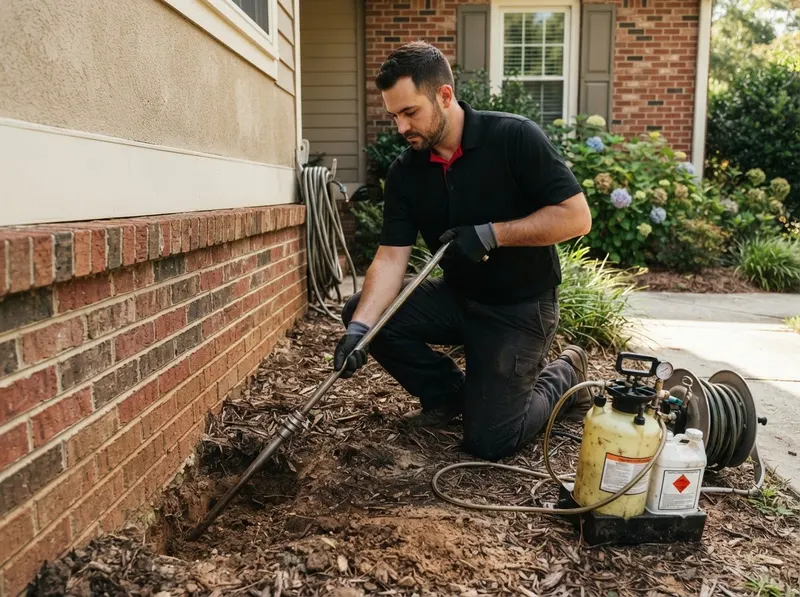
Subterranean termites nest underground where high soil moisture sustains their colonies, sending thousands of foraging workers into structural framing via protective mud shelter tubes. In the Midlands of South Carolina, warm river basins near the Congaree River and clay-rich soil pockets create prime conditions for Eastern subterranean termites to establish heavy colonies against foundation walls. StoneHarbor Pest Relief deploys science-backed containment that neutralizes termite colonies without forcing homeowners into high-pressure annual lock-in arrangements or using harsh-smelling airborne broad-spectrum sprays. Liquid termiticides containing modern non-repellent active ingredients like fipronil adhere directly to soil particles as outlined by the United States Environmental Protection Agency, allowing foraging insects to unwittingly carry the undetectable compound back into the central subterranean nest.
Selecting the right eradication pathway depends strictly on the foundation architecture and exterior ground clearance of each property. Homes in historic neighborhoods like Cottontown and Elmwood Park frequently feature raised brick-and-pier crawlspace designs that demand deep internal trenching and precise soil injection alongside interior masonry piers. In contrast, modern slab-on-grade homes in Forest Acres or Lake Katherine require exterior perimeter trenching and occasional sub-slab horizontal drilling to secure hidden expansion joints, consistent with standards from the Clemson University Department of Pesticide Regulation. Continuous liquid perimeter barriers provide prompt, decisive perimeter interception, whereas low-profile subterranean bait stations monitored per National Pest Management Association guidelines fit properties bordered by extensive hardscaping, stone patios, or sensitive decorative gardens where concrete trenching would cause unwanted landscape disruption.
Local structural characteristics dictate specific physical risks during the peak swarming window from March through May across Shandon, Heathwood, and Rosewood. High annual humidity combined with dense oak canopies leaves damp wooden sills vulnerable to colony transfer, which aligns with seasonal termite activity tracking by the Cooperative Extension System. Soil moisture issues documented in flood plains near Congaree National Park and the lower Saluda basin accelerate subterranean movement toward subflooring. Implementing localized targeted applications under strict Occupational Safety and Health Administration residential work-safety guidelines ensures that non-repellent solutions remain anchored precisely where the soil contacts foundational masonry. StoneHarbor Pest Relief restores domestic quiet by addressing subterranean colonies at the subterranean soil interface, safeguarding structural structural members while avoiding intrusive airborne indoor residues.
Every job gets a firm, written price after a free on-site visit.
Tell us about your subterranean termite treatment job in columbia and we'll send a clear, written quote, usually the same day.
 StoneHarbor Pest Relief