Crawlspace moisture management in the South Carolina Midlands directly dictates indoor domestic pest pressure. High relative humidity under pier-and-beam foundations creates an ideal habitat for subterranean…
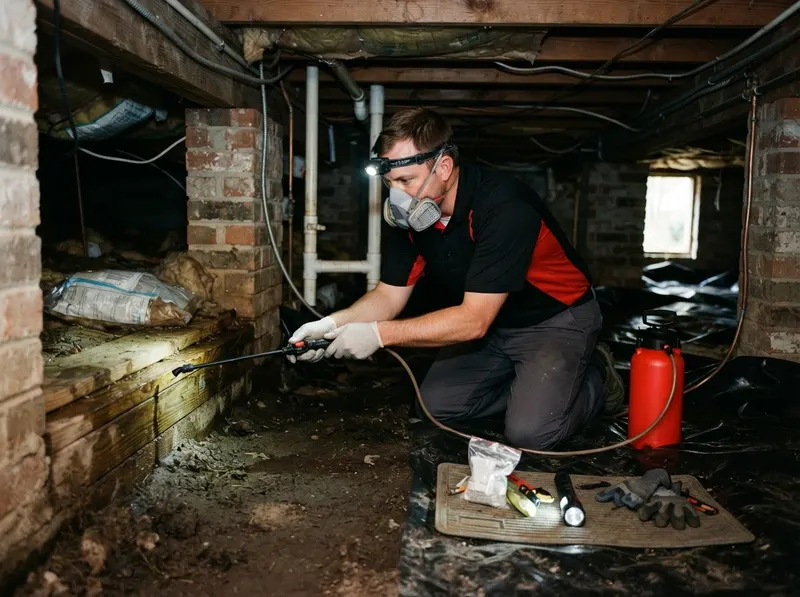
Crawlspace moisture management in the South Carolina Midlands directly dictates indoor domestic pest pressure. High relative humidity under pier-and-beam foundations creates an ideal habitat for subterranean wood-destroying insects and moisture-dependent pests. When subfloor wood moisture content surpasses 19%, structural framing becomes vulnerable to colonization by Clemson University Cooperative Extension monitored species, including the eastern subterranean termite and powderpost beetles. Historical foundations throughout Shandon, Cottontown, and Elmwood Park frequently sit over bare dirt floors that absorb elevated groundwater tables near the Congaree basin. Installing high-performance polyethylene ground barriers compliant with the Building Energy Codes Program reduces foundational vapor drive, preventing the humid microclimates that invite pest breeding under residential living quarters.
Controlling subfloor humidity eliminates the biological baseline pests require to thrive. Elevated dampness invites fungus gnats, centipedes, and heavy populations of smokybrown cockroaches that migrate upward through pipe penetrations into kitchens and bathrooms. The EPA Indoor Environments Division documents how unmitigated sub-slab dampness transfers spores and elevated relative humidity into living rooms, complicating household comfort and air cleanliness. By pairing inorganic, low-toxicity mineral borate timber applications under guidelines from the USDA Forest Products Laboratory with durable crawlspace encapsulations, structural floor systems stay dry and chemically repellent to wood-destroying pests without filling family living zones with airborne synthetic solvent odors.
Structural moisture barriers require precise ground preparation rather than rushed installation. Technicians clear biological debris, level soil hummocks, and install a continuous tear-resistant ground membrane sealed at piers and foundation perimeters as outlined by the ASTM E1745 vapor retarder standards. Foundation perimeter air currents must align with International Residential Code foundation drainage guidelines, preventing water pooling near footings in Lake Katherine and Forest Acres where seasonal cloudbursts overwhelm older stormwater paths. If foundation moisture stems from exterior runoff rather than capillary earth rise, installing interior perimeter drainage and a dedicated sump pump system takes precedence over vapor sealing alone, preventing trapped subterranean water pools.
Long-term subfloor defense relies on precise mechanical exclusion alongside moisture reduction. Open foundation vents invite mice and roof rats that chew insulation and wiring, creating fire hazards noted by the National Fire Protection Association. StoneHarbor Pest Relief secures foundation access doors and reinforces vent openings using stainless steel mesh adhering to CDC structural rodent exclusion methods. This mechanical perimeter stops small rodents and large pests while preserving necessary perimeter drainage. Mechanical exclusion and relative humidity controls remove the food, moisture, and entry channels pests depend on, shielding family living areas above without repeated broadcast chemical drenching.
Every job gets a firm, written price after a free on-site visit.
Tell us about your crawlspace pest defense and moisture control job in columbia and we'll send a clear, written quote, usually the same day.
 StoneHarbor Pest Relief