Stinging insect populations peak across Richland County between June and October, establishing aggressive colonies under historic eaves in Shandon, inside soffits along Rosewood, and throughout mature pine canopies…
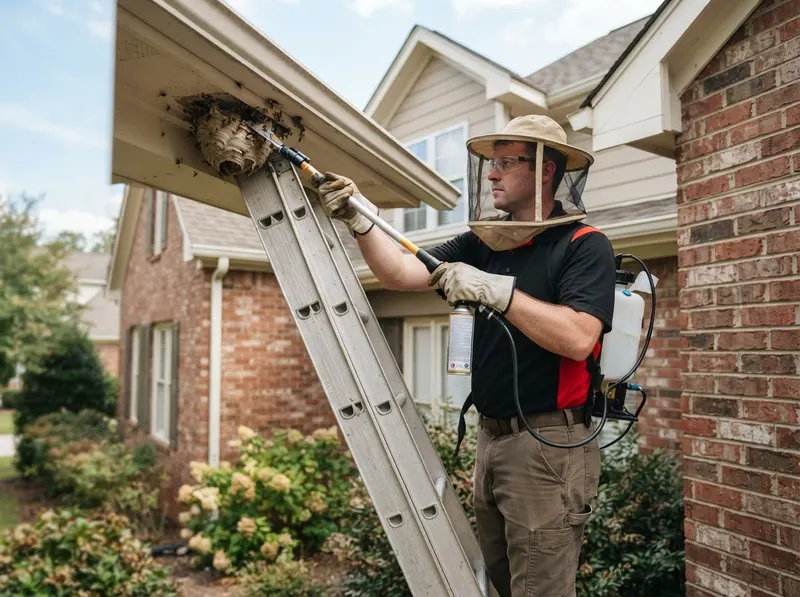
Stinging insect populations peak across Richland County between June and October, establishing aggressive colonies under historic eaves in Shandon, inside soffits along Rosewood, and throughout mature pine canopies near Lake Katherine. Direct identification of the target pest determines the protocol; paper wasps construct open, umbrella-shaped combs beneath porch ceilings in Cottontown, whereas aerial yellowjackets and bald-faced hornets assemble thick, multi-tiered cellulose cartons capable of housing over 1,000 active workers. Proper mechanical removal follows strict guidelines established by the EPA pesticide safety standards to ensure that active compounds do not migrate into domestic ventilation pathways. When aggressive species nest near high-traffic family zones, DIY aerosol applications frequently drive agitated insects into indoor wall voids or crawlspaces, escalating stinging hazards for children and household pets. StoneHarbor Pest Relief utilizes closed-system formulations approved under the Clemson University Department of Pesticide Regulation, neutralizing the central queen and developing brood before executing complete physical removal.
Subterranean yellowjacket nests require an alternate methodology compared to structural eave colonies. In forested residential parcels throughout Forest Acres and Heathwood, eastern yellowjackets commonly occupy abandoned rodent burrows or compost hollows, expanding undetected until foot traffic triggers mass defensive swarming. These subterranean complexes often measure 12 to 24 inches in diameter and contain up to 4,000 individuals by late summer. Standard perimeter misting fails to penetrate these root-bound chambers; remediation mandates calibrated liquid injections directly into the primary entrance followed by structural tamping. Adherence to OSHA personal protective equipment standards safeguards technicians against severe envenomation risks during heavy excavation. Ground colonies located near public rights-of-way or schools must conform to local nuisance parameters enforced by Richland County government, ensuring neighboring domestic areas remain secure during treatment operations.
Cavity-dwelling species like European hornets frequently compromise attic louvers, chimney gaps, and hollow fascia boards in historic structures throughout Elmwood Park and Earlewood. Left unchecked, structural nests generate excessive organic moisture that stains interior drywall and degrades insulation. Interventions in structural voids prioritize micro-encapsulated formulations that adhere to exiting foragers, dispersing through the colony without generating lingering fumes in adjacent bedrooms. Operators consult the Entomological Society of America species profile metrics to time removals during low-foraging dawn or twilight hours, capturing the maximum worker count within the structure. Integrated exclusion guidance follows every physical extraction, sealing structural voids with non-corrosive copper mesh and silicone sealants aligned with structural standards set by the ASTM International building materials standards. Homeowners managing sensitive ecological landscapes near Finlay Park or the South Carolina State House can review botanical preservation mandates supported by the South Carolina Department of Natural Resources to coordinate perimeter protection with wild pollinator conservation.
Every job gets a firm, written price after a free on-site visit.
Tell us about your stinging insect nest removal job in columbia and we'll send a clear, written quote, usually the same day.
 StoneHarbor Pest Relief