Nuisance ant colony eradication in Columbia eliminates structural infestations at the reproductive source rather than simply killing surface foragers. In humid Midlands river basins, species like the odorous house ant…
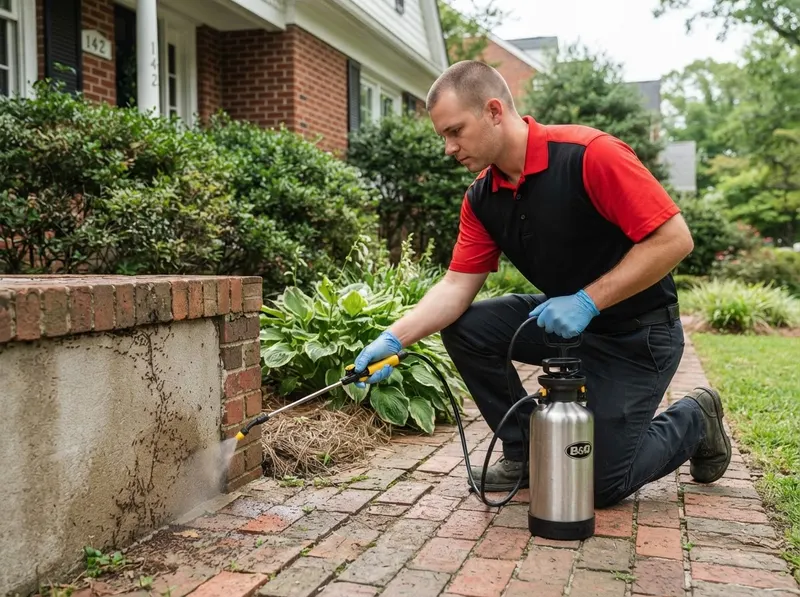
Nuisance ant colony eradication in Columbia eliminates structural infestations at the reproductive source rather than simply killing surface foragers. In humid Midlands river basins, species like the odorous house ant (Tapinoma sessile) and the invasive Argentine ant (Linepithema humile) establish dense polydomous networks, supercolonies containing dozens of satellite nests and multiple egg-laying queens. When homeowners apply grocery-store synthetic pyrethroid sprays to baseboards, these surface-acting chemicals trigger colony budding, causing queens to fracture into three or four distinct sub-colonies behind bathroom tile, wall insulation, and kitchen cabinets. Professional eradication relies instead on undetectable non-repellent active ingredients and slow-acting matrix baits formulated according to EPA pesticide safety standards. Foraging workers consume these low-toxicity matrices, return to the subterranean nest, and pass the active ingredient to larvae and queens through trophallaxis over a 72-hour cycle, eliminating the reproductive core without foul odors or airborne residues.
Eradication pricing begins at our standard $300 minimum for localized interior void injections and foundational perimeter bands on homes up to 1,500 square feet. Larger historic parcels or properties near high-moisture drainage basins, such as brick bungalows in Shandon, mid-century crawlspaces in Forest Acres, or shaded yards in Heathwood, frequently require expanded yard broadcast treatments that scale to $450 or $550 depending on soil saturation and tree canopy density. While single-queen pavement ant nests can be neutralized in a single targeted visit, multi-queen Argentine networks spanning moist pine straw in Lake Katherine or Earlewood often necessitate a two-phase protocol spaced 21 days apart to interrupt the emerging brood cycle. Homeowners choosing between a one-time cleanout and ongoing maintenance should note that perimeter bait barriers prevent outdoor re-entry, whereas indoor-only applications leave the subterranean yard reservoirs intact, allowing outdoor workers to resume scouting after heavy summer downpours.
Local environmental conditions heavily influence ant foraging behavior in Richland County. Columbia's prolonged subtropical humidity, documented by the National Weather Service Columbia Office, combined with the dense clay and loamy soils along the Congaree River corridor, drives colonies into homes during early summer heat waves and autumn deluge events. Historic neighborhoods like Cottontown and Elmwood Park present unique structural harborage points, including ancient heart-pine framing, unsealed foundation vents, and stone masonry footers where acrobat and odorous house ants establish satellite broods near plumbing stacks. StoneHarbor Pest Relief focuses treatments directly on foundation footers, exterior weep screeds, window sills, and tree branches touching gutters, adhering to structural integrity guidelines maintained by the Clemson University Department of Pesticide Regulation and urban pest research from the Entomological Society of America. Structural repairs like sealing utility penetrations complement our liquid perimeter barriers, reflecting building best practices from the U.S. Department of Housing and Urban Development and moisture control standards from the CDC Healthy Homes Program.
Implementing sustainable outdoor management requires balancing targeted pest defense with local watershed health. Chemical placement adheres to non-target organism safety frameworks outlined by the U.S. Fish and Wildlife Service and the South Carolina Department of Natural Resources, ensuring bait stations and targeted yard granules do not leach into municipal storm drains feeding the Saluda or Broad rivers. Property owners can also coordinate vegetation setbacks using resources from the South Carolina Forestry Commission to prevent canopy trails over roofing shingles. The following step-by-step process restores domestic safety without disruption:
1. Technicians map outdoor foraging highways, soil nests, and interior entry portals along baseboards, sinks, and appliance motors.
2. We deploy species-matched carbohydrate or protein matrix baits in tamper-resistant, enclosed bait stations along structural travel paths.
3. Specialists apply a non-repellent exterior perimeter barrier around the foundation masonry up to two feet high and two feet out on the soil.
4. Follow-up observations evaluate trophallaxis rate and trail collapse over 14 days, verifying zero worker activity in living areas.
Every job gets a firm, written price after a free on-site visit.
Tell us about your nuisance ant colony eradication job in columbia and we'll send a clear, written quote, usually the same day.
 StoneHarbor Pest Relief